Pesto pasta is one of those timeless dishes that proves simple ingredients can create something incredibly satisfying. With its vibrant green color, fresh herb aroma, and rich, nutty flavor, pesto pasta is a staple in Italian cuisine that’s loved around the world.
The beauty of pesto pasta lies in its simplicity. With just a handful of ingredients—pasta, pesto, cheese, and a few seasonings—you can create a dish that feels fresh, flavorful, and restaurant-quality. This recipe focuses on achieving the perfect balance of creamy pesto coating, perfectly cooked pasta, and a burst of fresh basil in every bite.
1. Pesto Pasta Recipe ( Yield: 4 Serving )
Ingredients
- 1/2 cup homemade basil pesto or store-bought pesto
- 12 ounces spaghetti pasta
- Freshly grated Parmesan cheese, for serving
- Fresh basil leaves, for garnish
- Sea salt and freshly ground black pepper
Instructions
Bring a large pot of salted water to a boil
Fill a large pot with water and add a generous pinch of sea salt. The water should taste slightly salty, as this is your only chance to season the pasta itself. Bring it to a rolling boil over high heat.
Cook the spaghetti
Add the spaghetti to the boiling water and cook according to the package instructions, usually about 8–10 minutes. Stir occasionally to prevent sticking. Aim for an “al dente” texture—tender but still slightly firm when bitten.
Reserve pasta water
Before draining, carefully scoop out about 1/2 cup of the pasta cooking water and set it aside. This starchy water is key to creating a silky pesto sauce that clings beautifully to the pasta.
Drain the pasta
Drain the spaghetti in a colander, but do not rinse it. Rinsing removes the starch that helps the sauce adhere.
Combine pasta and pesto
Transfer the hot pasta back into the pot or a large mixing bowl. Add the pesto and toss gently to coat the pasta evenly.
Adjust the consistency
Add a few tablespoons of the reserved pasta water and toss again. Continue adding small amounts until the sauce becomes smooth and lightly coats each strand of pasta. This step transforms the pesto into a silky, cohesive sauce rather than a thick paste.
Season to taste
Taste the pasta and add sea salt and freshly ground black pepper as needed. Keep in mind that Parmesan cheese will also add saltiness.
Serve immediately
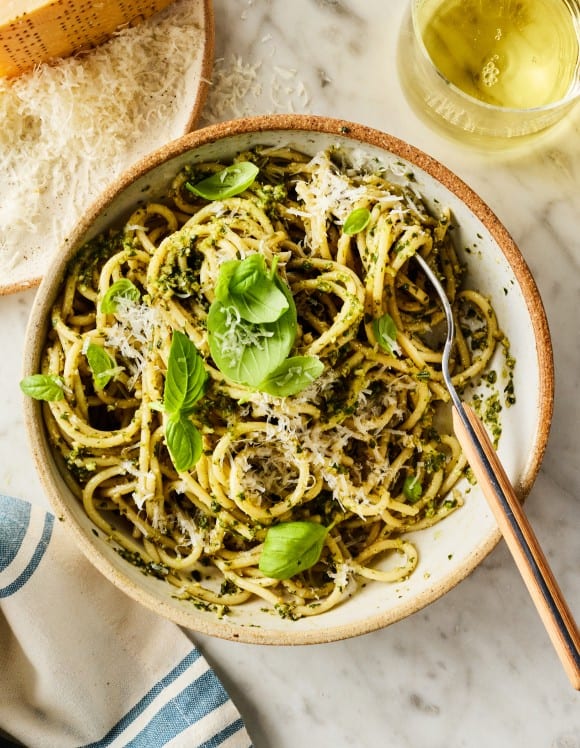
Plate the pasta while it’s still warm. Top with freshly grated Parmesan cheese and garnish with fresh basil leaves for a burst of color and aroma.
Optional finishing touch
Drizzle a small amount of extra virgin olive oil over the top for added richness and shine.
2. Tips for Perfect Pesto Pasta
Achieving the perfect pesto pasta isn’t complicated, but a few small techniques can make a big difference in both flavor and texture.
First, always salt your pasta water properly. This step builds the foundation of flavor. Without it, even the best pesto can taste flat. The pasta absorbs the salt as it cooks, enhancing the overall dish from the inside out.
Next, avoid overheating the pesto. Pesto is made with fresh herbs, and high heat can dull its bright flavor and color. That’s why it’s best to mix the pesto with the pasta after it has been drained and slightly cooled, rather than cooking it directly in a hot pan.
Using reserved pasta water is another essential tip. The starch in the water helps emulsify the pesto, creating a smoother, more cohesive sauce that clings to the noodles instead of sitting at the bottom of the bowl.
Choose high-quality ingredients whenever possible. A good pesto—whether homemade or store-bought—should have a fresh basil aroma, balanced garlic flavor, and a rich olive oil base. Freshly grated Parmesan cheese will also elevate the dish compared to pre-grated options.
Finally, don’t overcomplicate the dish. Pesto pasta shines because of its simplicity. While you can add extras like cherry tomatoes, grilled chicken, or pine nuts, keeping it minimal allows the pesto flavor to truly stand out.
3. Frequently Asked Questions
Can I use a different type of pasta instead of spaghetti?
Absolutely. While spaghetti is classic, pesto works well with many shapes such as penne, fusilli, or farfalle. Short pasta shapes are especially great because they hold the sauce in their ridges and curves.
Is it better to use homemade pesto or store-bought pesto?
Both options work well. Homemade pesto offers a fresher, more vibrant flavor, while store-bought pesto is convenient and still delicious when you choose a high-quality brand. You can also enhance store-bought pesto with a little extra olive oil or fresh basil.
How can I make pesto pasta creamier without cream?
The key is pasta water. Adding reserved cooking water creates a naturally creamy texture without needing heavy cream. The starch binds with the oil in the pesto to form a smooth sauce.
Can pesto pasta be served cold?
Yes, pesto pasta can be enjoyed as a cold pasta salad. Simply let it cool after mixing, then refrigerate. You may want to add a drizzle of olive oil before serving to refresh the texture.
How do I store and reheat leftovers?
Store leftover pesto pasta in an airtight container in the refrigerator for up to 3 days. When reheating, add a splash of water or olive oil to loosen the sauce and warm gently to avoid drying it out.
4. Nutrition Information
| Nutrient | Amount per Serving |
|---|---|
| Calories | 420 kcal |
| Protein | 12 g |
| Carbohydrates | 52 g |
| Fat | 18 g |
| Saturated Fat | 4 g |
| Fiber | 3 g |
| Sugar | 2 g |
| Sodium | 320 mg |
Simple pesto pasta is a perfect example of how a few quality ingredients can come together to create something truly special. With its fresh basil flavor, creamy texture, and comforting appeal, it’s a dish that works for any occasion—from quick lunches to cozy dinners.
Once you master the basics, you can easily customize it to suit your taste. Add vegetables, proteins, or extra herbs to make it your own. No matter how you serve it, pesto pasta remains a reliable, flavorful dish that you’ll want to make again and again.
